Posts

How to Know When You Need to Detox Your Hair

Image
  Your hair may need a detox if: • It feels weighed down, greasy, or sticky • You've recently used a lot of styling products • Your scalp is itchy or flaky • Your hair has become dull or lackluster • You've tried a new product that didn't agree with your hair • Your hair has built-up residue from frequent styling Click video to watch To detox your hair, try using a clarifying shampoo , or apple cider vinegar rinse to remove product buildup and restore your hair's natural balance! Click video to watch By clicking links on this page and buying products, I earn a commission at no cost to you.
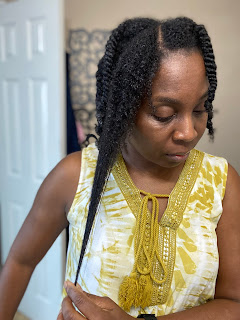
10 Things People with Long Natural Hair Do

Image
  Here are 10 things people with long natural hair may do: Click video to watch. If you would like one on one coaching, please use this link to setup you appointment: https://bit.ly/NaturalHairCoach 1. Regularly condition and moisturize their hair to keep it soft and healthy. 2. Use protective styles like braids, twists, or buns to minimize breakage and tangling. 3. Avoid using heat styling tools or use them sparingly to prevent damage. Always use a heat protectant . 4. Use gentle, sulfate-free shampoos and conditioners specifically formulated for natural hair. 5. Take regular trims to prevent split ends and breakage. 6. Use wide-tooth combs or detangling brushes to gently comb out tangles. 7. Apply leave-in conditioners or hair oils to keep their hair hydrated. 8. Use hair masks or deep conditioning treatments to nourish their hair. 9. Protect their hair from the sun by wearing hats, scarves, or using hair sunscreens. 10. Embrace and celebrate their natural texture, rather th...

Why You Get Dandruff Whenever You Do Protective Styles

Image
  @trancasporamoor You may experience dandruff when wearing protective styles due to: • Trapped oil and scalp buildup: Protective styles like braids, twists, or locs can cause oil and product buildup on the scalp, leading to dandruff. • Scalp irritation: Tight braids or styles that pull on the hair can cause scalp irritation, leading to dandruff. • Fungal growth: Trapped moisture and warmth under the protective style can create an environment conducive to fungal growth, contributing to dandruff. • Product sensitivity: Some hair products used in protective styles can irritate the scalp and cause dandruff. To minimize dandruff in protective styles, maintain good scalp hygiene, use gentle products, and incorporate anti-dandruff treatments. Also, regularly removing and re-doing protective styles can help reduce buildup and irritation.

Why Your Hair Feels Hard After Washing It

Image
@jay_anoka Here is the solution: Your hair may feel hard after washing due to: • Stripping of natural oils: Harsh shampoos such as sulfate shampoos or over-washing can strip your hair of its natural oils, leaving it feeling dry and hard. • Product buildup: Using too many styling products or using them too frequently can cause buildup and lead to a hard, crunchy texture. • Damage or split ends: Hair damage or split ends can make your hair feel rough and hard. • Water quality: Hard water or high mineral content in your water can cause hair to feel stiff and hard. • Over-conditioning: Believe it or not, using too much conditioner can weigh your hair down and make it feel hard. To combat this, try using gentle, sulfate-free shampoos, reducing product usage, getting regular trims to prevent damage, and using a water filter or conditioner to soften your water.

Why does my natural hair break more now than when it was relaxed

Image
When your natural hair breaks more now than when it was relaxed, it could be due to several reasons. Here are some possible factors: Watch the video below • Lack of moisture: Natural hair needs consistent moisture, which can be harder to maintain than relaxed hair. Use hydrating products and techniques like co-washing and leave-ins. • Manipulation: Styling and handling natural hair can cause breakage, especially if you're using excessive force or heat. Be gentle and minimize heat styling. • Protein overload: Overusing protein products can lead to brittle hair that breaks easily. Balance protein with moisturizing products. • Split ends: Untrimmed split ends can travel up the hair shaft, causing breakage. Regular trims can help prevent this. • Hair cuticle lifting: Natural hair has a raised cuticle layer, making it more prone to breakage. Use gentle products and techniques to minimize damage. Remember, natural hair requires different care than relaxed hair. Adjust your routine and pr...

What causes uneven growth in Natural Hair?

Image
 Uneven growth in natural hair can be caused by a few factors, including: • Hormonal changes: Hormonal fluctuations can affect hair growth, leading to uneven growth rates. • Genetics: Inherited hair growth patterns can influence hair growth rates. • Nutrient deficiencies: Lack of essential vitamins and minerals can impact hair growth. • Hair damage: Breakage or damage to the hair shaft can slow growth in certain areas. • Styling and manipulation: Frequent styling, handling, or tension on the hair can cause uneven growth. • Product buildup: Accumulation of product residue can hinder hair growth in certain areas. • Scalp health: Issues like dandruff, psoriasis, or fungal conditions can lead to uneven growth. Watch this  To address uneven growth, focus on nourishing your hair with a balanced diet, gentle care, and regular trims to maintain healthy growth patterns.

Can Coconut Oil Cause Dandruff?

Image
  Coconut oil itself is not typically a cause of dandruff. In fact, coconut oil has antifungal and antibacterial properties that may help control scalp conditions that can lead to dandruff. However, if you have a sensitivity or allergy to coconut oil, it could cause irritation or itching on the scalp, which could potentially lead to dandruff. Additionally, if coconut oil is not properly absorbed or leaves a residue on the scalp, it could contribute to buildup and potentially lead to dandruff. Generally, coconut oil is considered beneficial for hair and scalp health, but individual reactions can vary.